What is brand positioning? 5 steps to build it
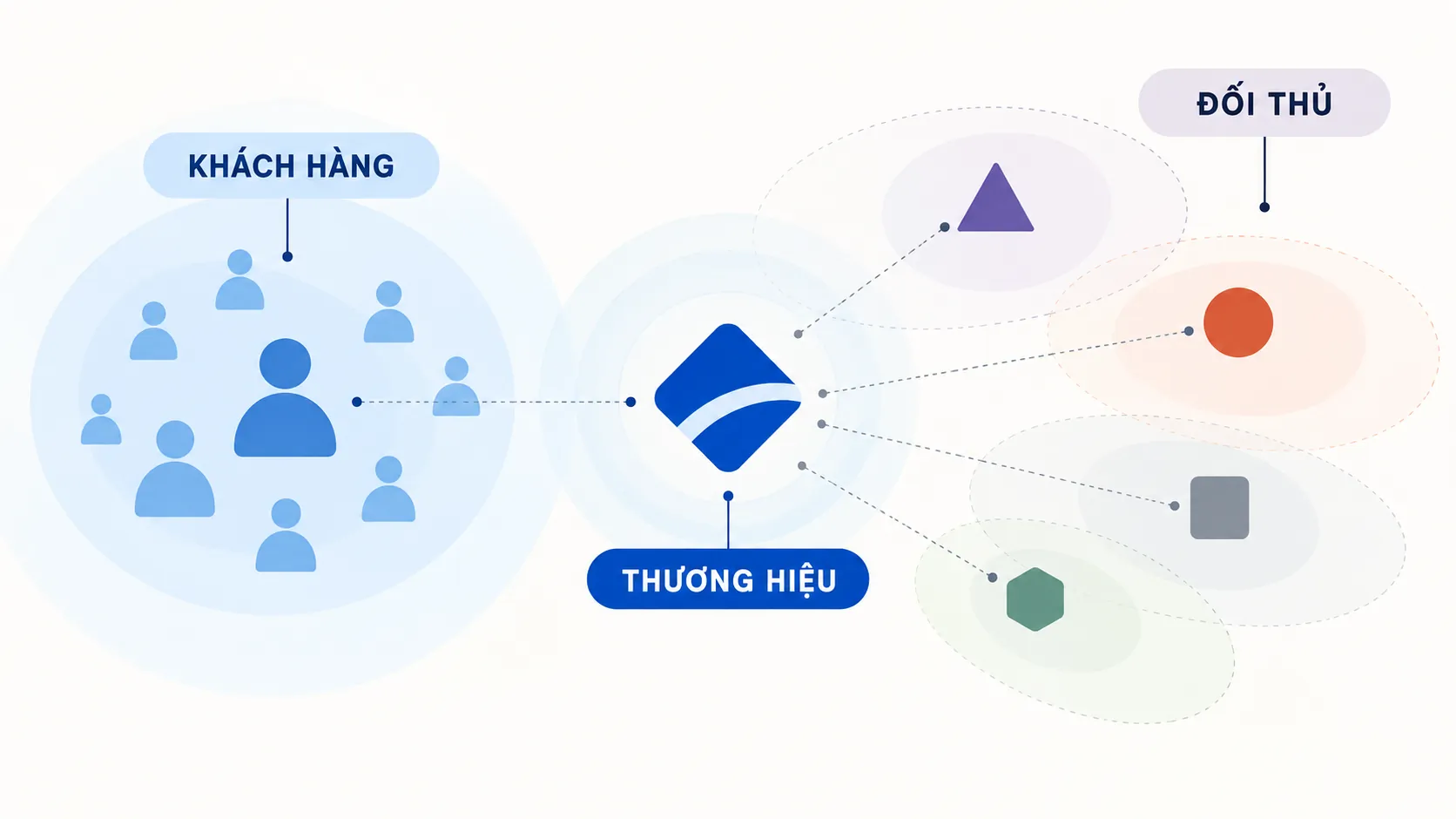
A brand cannot decide for itself what customers will think of it. Customers always form a perception from what they see, experience and compare against the other options in the market. So brand positioning is not just picking a slogan or an attribute to communicate; it is the process of defining how the business wants to be recognized and finding a sound basis for building that perception in the customer’s mind.
KEY TAKEAWAY
Effective brand positioning starts with understanding customers and the competitive context, and only then chooses what the brand wants to be remembered for.
What brand positioning really is
Brand positioning can be understood as the position a brand, product or service holds in the minds of target customers when set beside other competing options.
The key is the word “compare.” Customers rarely judge a brand entirely on its own. They usually form a perception from what the brand offers and how it differs from the brands they already know or are considering.
So positioning is not simply what a business wants to say about itself. It concerns the gap between the perception the business wants to create and the perception actually forming in the customer’s mind.
PRINCIPLE 01
Positioning is not something a brand declares for itself
A business can choose its positioning direction deliberately and organize its marketing, products, services or identity to reinforce it. Still, the final perception is formed on the customer’s side, through contact and comparison in the market.
A good positioning should therefore start from the market, not only from the business’s internal wishes.
5 steps of brand positioning, from customers to choosing a position
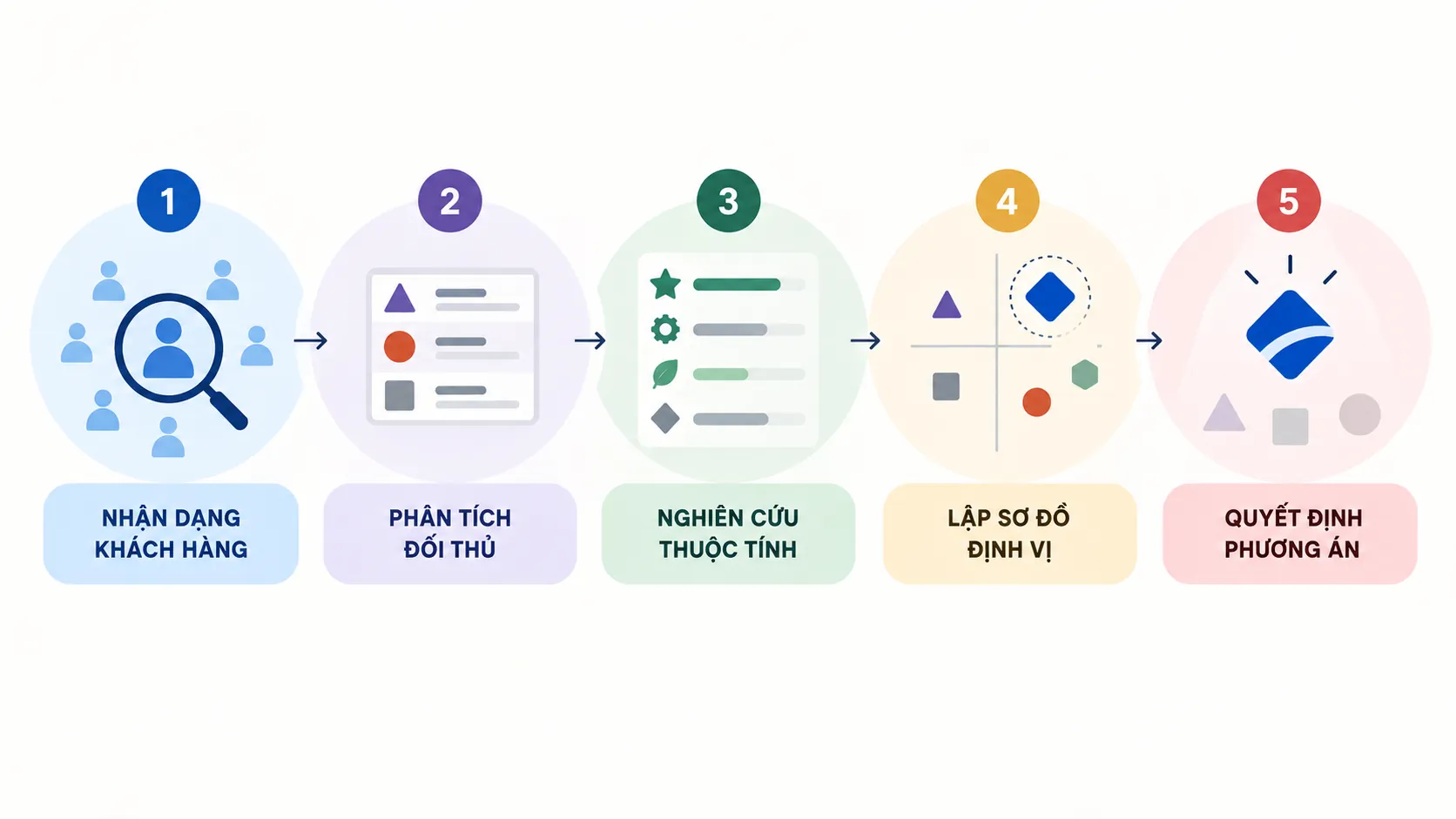
A positioning process can start with five steps: identify target customers, analyze competitors, research product attributes, build a positioning map and finally choose the positioning option that fits.
PROCESS
- Step 1 — Identify target customers: Define the people the product or service is aimed at, along with their needs, motivations and buying context.
- Step 2 — Analyze competitors: Learn how customers see the existing brands and the differences the market has already formed.
- Step 3 — Research product attributes: Identify the features that genuinely influence customers’ choices.
- Step 4 — Build the positioning map: Place the brand and its competitors on suitable criteria to see how they relate in the market.
- Step 5 — Decide on the positioning: Choose the attribute and the positioning direction based on customers, competition and what the business is able to pursue.
Step 1: Identify the right target customers
Target customers are the individuals or groups a product is aimed at and who are likely to buy or use it. The more clearly this group is defined, the stronger the basis for choosing a fitting position in their minds.
For a premium facial cleanser made with plant-derived active ingredients, for example, the customer profile can be described by age, place of residence, income, lifestyle and interests related to the product.
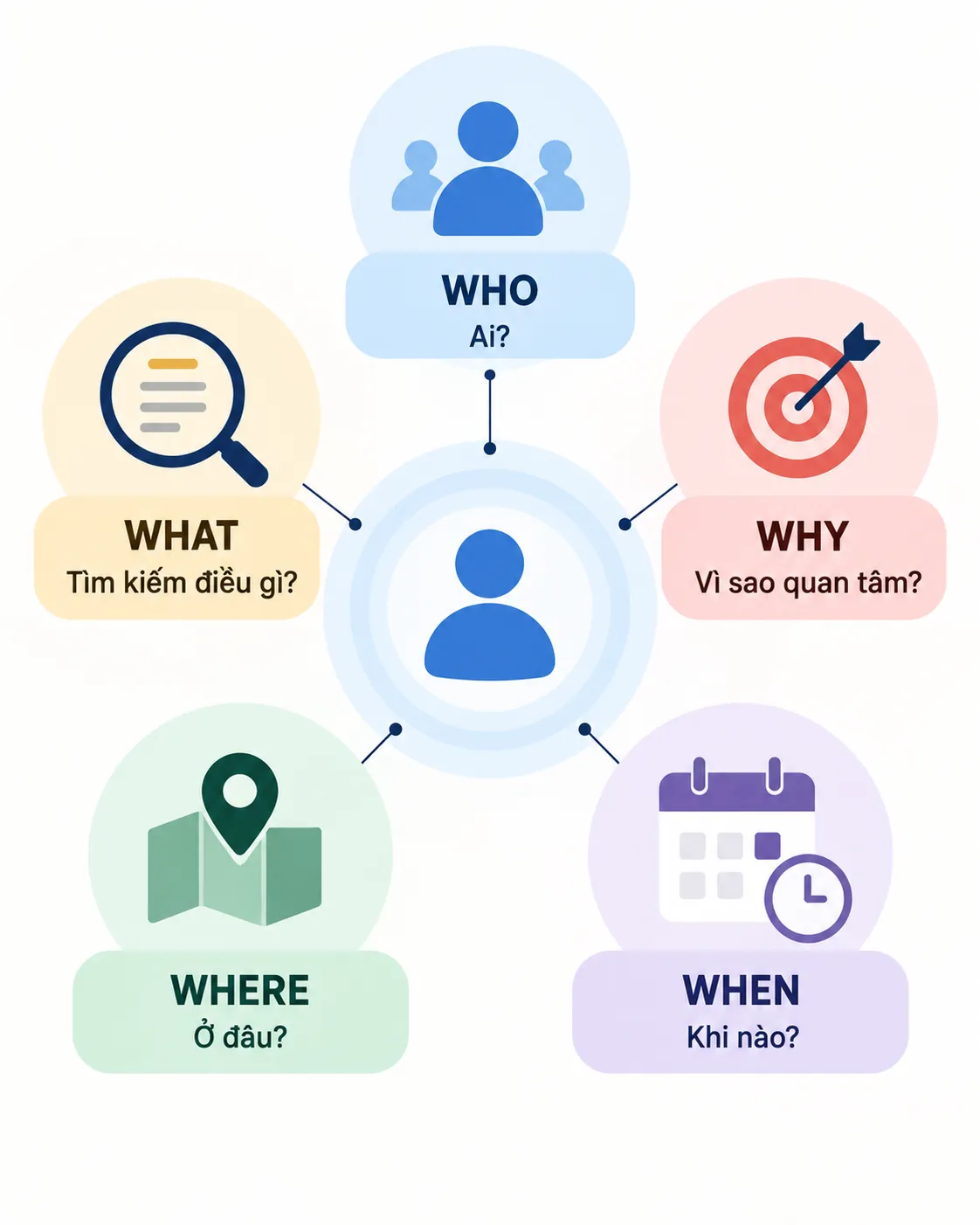
However, demographics are only a starting point. For a deeper understanding, you can use the 5W set of questions:
FRAMEWORK
5W for building a customer profile
This set of questions helps move from a general group of customers to a clearer understanding of buyers, needs and contexts of use.
- Who? Who is the buyer, the user and the person who influences the decision?
- What? What are they looking for in the product?
- Why? Why does that attribute matter to them? What need are they buying the product to meet?
- Where? Where do they live, what group do they belong to and where do they usually come across the product?
- When? When do they buy, in what circumstances or for what need?
One point to note is that positioning does not have to aim at the widest possible group of customers. A narrow market with a clear need can sometimes provide a better basis for a brand to define a specific position.
Step 2: Analyze competitors before choosing a position
A business’s target customers may also be the target customers of other brands. So a positioning cannot be built by looking only at your own product.
A business needs to learn how customers currently perceive the products on the market: which brand is seen as strong on which attribute, how the products differ and what gaps exist between them.
Competitor analysis is therefore not just a list of brands in the same industry. More important is understanding each brand’s relative position in the customer’s perception.
EXAMPLE
Take a hypothetical example: a business is about to launch a new toothpaste. Instead of focusing only on describing the product’s ingredients or technology, it needs to find out how similar products are currently perceived by customers and which attributes are being used to tell them apart.
This lays the groundwork for the next step: identifying the criteria customers actually use to compare options.
A new brand does not have to be different in every respect. What matters is finding a meaningful basis for difference within a specific competitive context.
Step 3: Research the attributes that influence the buying decision
After understanding customers and competitors, a business needs to identify the attributes of its product or service that influence choice.
These attributes fall into two broad groups.
The first is function and composition, such as outstanding effectiveness, ingredients or production technology.
The second is commercial service, such as warranty, payment terms or after-sales policy.
Not every attribute a business has carries positioning value. A feature becomes noteworthy only when it relates to what customers care about and can create differentiation in the competitive context.
COMMON MISTAKE
“Having a point of difference means you can position.”
Why it is not enough
A distinguishing feature is not necessarily a meaningful positioning criterion. If customers do not care about it, do not notice it or do not use it to compare options, the difference is unlikely to become a foundation for the brand’s position.
Step 4: Build a positioning map to see the competitive relationships
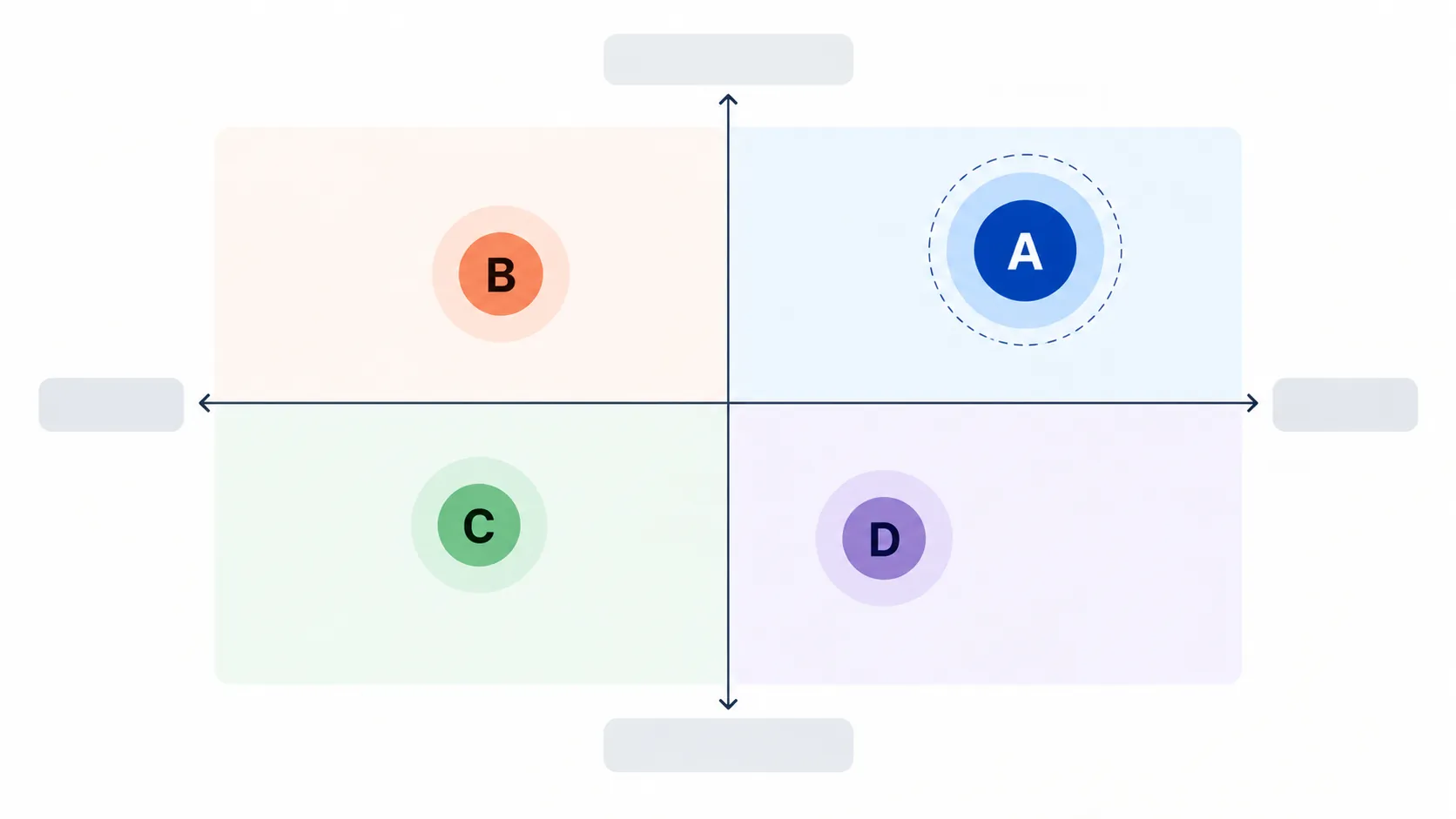
A positioning map is a visual tool that shows the relative position of products or brands on the attributes chosen.
A common approach is to use two axes to show two criteria, such as price and quality. But we should not assume that every industry fits these two axes.
Positioning criteria must come from how customers actually evaluate and tell options apart.
LESS EFFECTIVE
- Choosing positioning axes only because they are easy to measure.
- Assuming price and quality are always the right two criteria.
- Judging a brand’s position without considering how customers perceive it.
STRONGER
- Start from the attributes that influence the buying decision.
- Choose axes that can show the difference between the brand and its competitors.
- Set the brand’s position in relation to customer perception.
One example in the source material is Sunsilk. If the product does not stand out from competitors on the criteria used in the map, the business should consider a different positioning axis that fits better. In this case, the attribute “silky smooth” was used as a different direction and expressed through the slogan “smooth as silk.”
This shows that the positioning map is not the end goal. Its value lies in helping a business see which criteria it should compete on.
Step 5: Decide on the positioning option
Only after analyzing customers, competitors and product attributes can a business choose a positioning option.
This decision should weigh at least two factors named in the source material: the expected level of market demand and the level of competition among existing products.
If a business has a cost advantage and wants to pursue a price-dominance strategy, a large segment where price is the prominent attribute can be the direction to choose. Conversely, if it pursues a focus strategy, a narrow segment with a better-fitting attribute may be worth considering.
The level of competition also affects the choice. Two brands can create a similar impression and still differ in how or in what situation they are used. Coffee, for instance, can be tied to different contexts: morning coffee, after-meal coffee or coffee for connoisseurs.
FIELD NOTE
In building a positioning, a useful question is not only “What does the brand want to be known for?” We also need to ask “Do customers actually use that attribute to tell the options apart?” These two questions separate what the business wants from a positioning basis that means something in the market.
Brand positioning should be seen as a decision about relationships
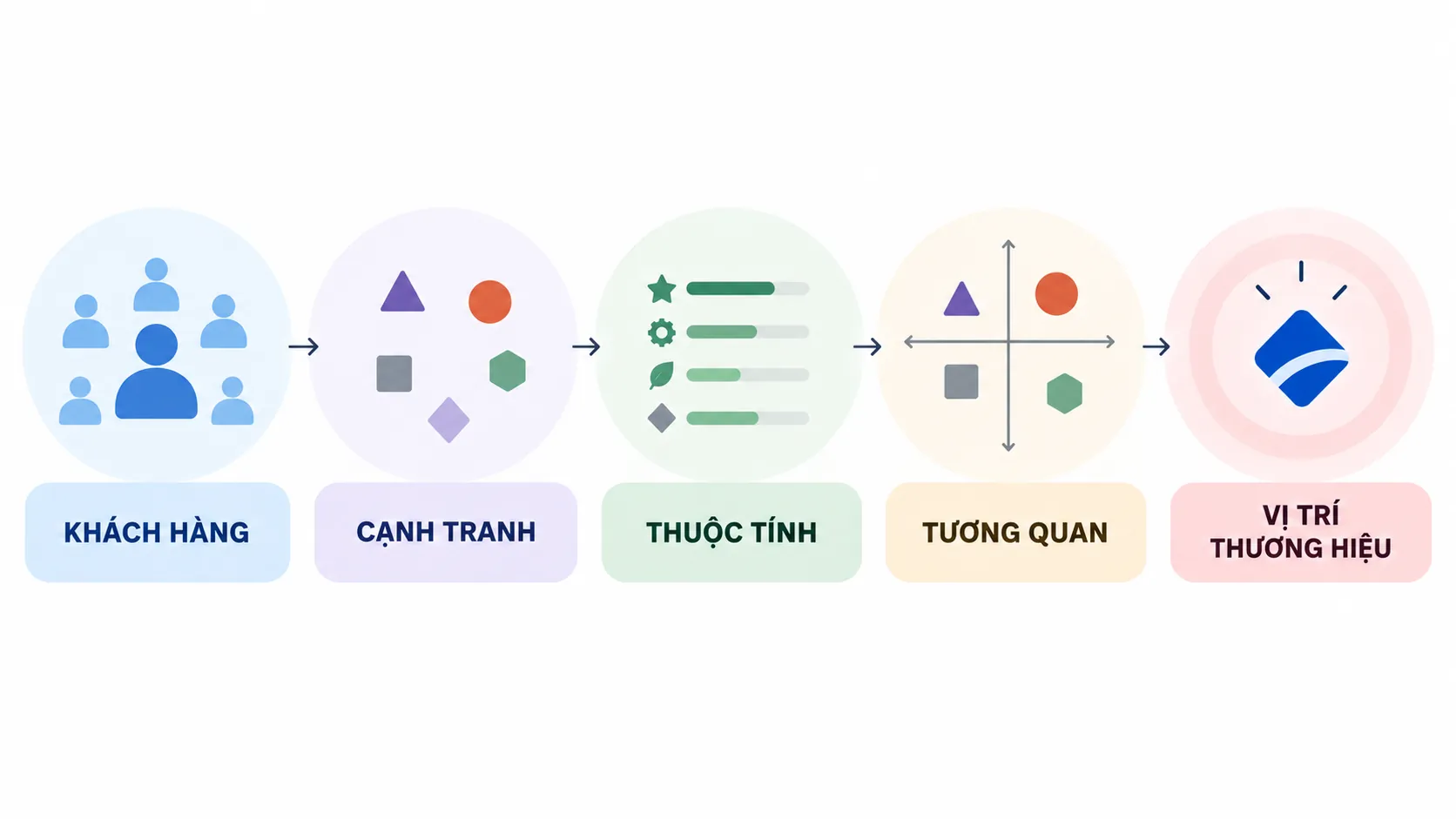
The five steps above can be seen as a logical chain rather than five separate tasks.
Customers tell you who needs to be persuaded and what they care about. Competitor analysis tells you how the market is perceived. Attribute research helps a business identify the factors that can create difference. The positioning map shows how the options relate to one another, and the final step is deciding the position the business wants to pursue.
CHECKLIST
Questions to ask:
- Who exactly are the target customers, and what are they looking for?
- How do customers perceive the competing brands?
- Which attributes really influence the choice?
- Which criteria best show how the brand relates to its competitors?
- Does the chosen position fit the market and the level of competition?
Brand positioning should therefore not begin with the search for a strikingly different slogan. It begins with understanding customers, competition and the attributes that matter in the choice process. Once that foundation is clear, decisions about messaging, identity and how the brand appears in the market have a basis for staying consistent with the position it wants.
FRESHBRAND
If a brand is struggling to decide where it should be different, start by asking three questions again: what are customers comparing, which position are competitors occupying, and what real basis does the brand have to be chosen?
FreshBrand can approach the brand problem from the standpoint of strategy and market perception, rather than starting right away with outward expression.