A saturated market is a golden opportunity, if you know how to differentiate
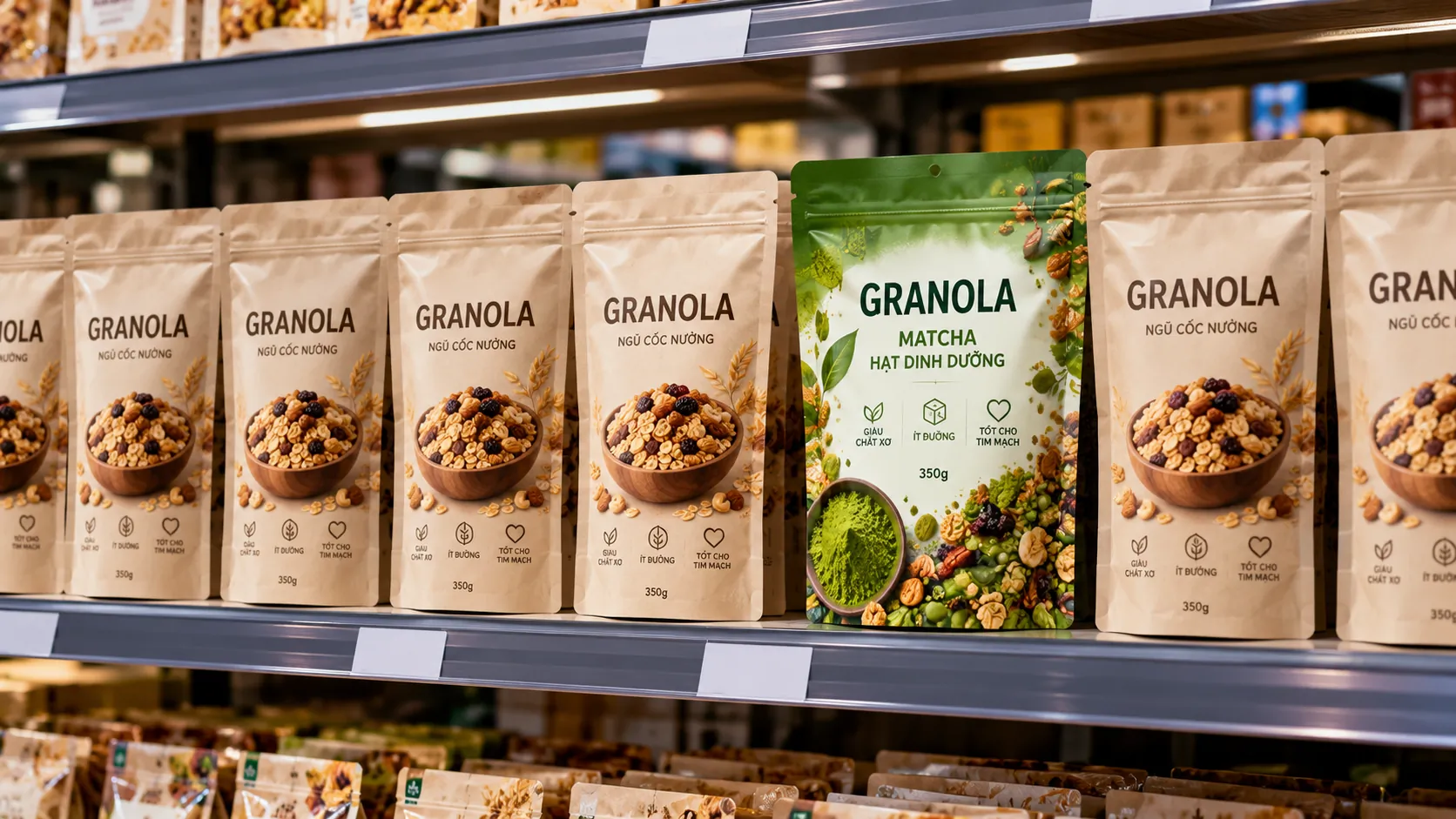
When a market already has too many similar products, businesses often think the opportunity has run out. But that very similarity can leave a gap for a different choice. When products, communication and ideas fall into a rut, the point is not necessarily to compete harder at the same game but to find an approach that gives customers a reason to choose you.
KEY TAKEAWAY
The more saturated the market, the more valuable the chance to be different — if a business finds a value clear enough to change how customers choose.
1. Saturation does not mean the opportunity is gone

A saturated market often has one easily noticed trait: brands start to sound alike, products become harder to tell apart and competition tends to revolve around familiar factors such as price, promotions, reach or the way of communicating.
In that case, trying to be “slightly better” on exactly the standard the market uses may not open a big enough gap. A business can invest more in communication, but if its message still matches its rivals’, customers still have little reason to remember or choose the brand.
Opportunity appears when a business looks again at what the market regards as normal.
Instead of asking “How do we compete better in the current market?”, a more valuable question may be: “Is there something customers accept as a standard that could actually be done differently?”
PRINCIPLE 01
Valuable difference is not about being strange for its own sake
A different idea matters only when it solves a problem, creates a better experience or offers a new choice with a convincing reason. A difference in form that adds no value easily becomes a short-lived difference.
2. Stanislaus: difference from the way the market produces

One example mentioned in the original text is Stanislaus Food Products, a tomato sauce maker that supplies many Italian restaurants in the United States.
In a market full of concentrated tomato sauces that are cheaper and easier to transport, Dino Cortopassi, the company’s owner, believed that canned fresh tomato sauce, which does not go through concentration, could make a better product.
This choice has a clear paradox: the product costs more than the others, but by the company’s own approach, it keeps the flavor and natural feel better.
This is exactly what deserves attention. Stanislaus did not try to become another version of the dominant kind of product. It chose a different standard to compete on: the quality of ingredients and the product experience rather than optimizing only for cost and transport advantages.
Context: The tomato sauce market has many concentrated products with advantages in cost and transport. Decision: Stanislaus developed canned fresh tomato sauce that is not concentrated. Problem: The product costs more than the common options on the market. Lesson: When a market optimizes around the same standard, a business can find opportunity by choosing a different standard of value.
What matters in this example is not that selling a more expensive product leads to success. The lesson lies in the relationship between a higher price and the value the customer receives.
If the price rises but the product does not deliver matching value, being different becomes a disadvantage. Conversely, if a business can offer a value that its target customers truly care about, a higher price can become a reasonable part of the positioning.
FIELD NOTE
In markets that already offer plenty of choice, customers do not necessarily need one more product that is “like the existing ones but slightly better”. They may need a clearer reason to change their choice. So before thinking about communication messages, a business should look again at its own product and the competitive standard it is pursuing.
3. White Castle and changing a familiar convention

Another example in the original text is White Castle, a hamburger chain noted for its square hamburgers at a time when consumers were used to round ones.
What is interesting is that a seemingly tiny shape can create a difference that is easy to recognize.
EXAMPLE
Picture a customer facing two options in a market where nearly every product has a similar shape, presentation and way of use. A product that appears in a different form immediately creates a new point of recognition.
That does not mean changing a shape is enough to create a strong brand. What is worth learning is that the company did not take an industry convention as unchangeable. A familiar feature of the product can still be reconsidered.
This example shows that difference can begin with a very specific detail, as long as the detail is clear enough for customers to notice and tie to the product experience.
LESS EFFECTIVE
- Competing by repeating the very standards the market has grown too used to.
- Focusing on resembling competitors but trying to communicate louder.
- Creating a difference in form without matching value.
STRONGER
- Reexamining the standard the industry assumes by default.
- Finding another value that customers truly care about.
- Making difference a meaningful part of the product and the experience.
4. The Vietnamese market is opening new standards of choice
The original text frames the issue in the context of a Vietnamese market that once had many goods of uneven quality, which left consumers little chance to choose products by quality.
As markets become more diverse, consumers have more choices and product quality increasingly becomes a factor in how they choose. This brings an important change for businesses: customers are not only looking for the lowest-priced product.
A product priced higher than its rivals can still be chosen if customers see that the value they receive is proportionate.
WHAT WE LOOK FOR
In brand strategy, one of the first questions to look at is: what standard are customers choosing by, and does the business really need to play by that same standard?
- If the whole industry is talking about price, check whether price is the only thing customers care about.
- If products are growing ever more alike, you need to find a difference that can be experienced, not merely claimed.
- If you want to price higher, you must make clear which value makes customers accept that price.
This matters especially for Vietnamese businesses that want to build a brand rather than just sell a product.
FRAMEWORK
Three questions for finding opportunity in a saturated market

Differentiation can start with three simple questions:
- What is the market doing the same? Identify the features, messages or standards that most competitors share.
- What do customers truly care about? Separate the factors a business talks about most from the values customers actually use to choose.
- Where can the business do things differently? Look for the gap between what the market offers and the value the business can create consistently.
These three questions help a business avoid a common mistake: confusing “different” with “strange”.
COMMON MISTAKE
“It is enough for the product to be different from competitors.”
Why that is not enough
A point of difference has value only when customers notice it, understand it and have a reason to care about it. If the difference is unrelated to a need or an experience, a business can create a very different product and still give no reason to choose it.
5. A higher price only matters when the value is higher too
One notable argument from the original text is that consumers may accept a moderately higher price if the product is significantly better in quality.
That said, this should not be read as a formula that “higher price = higher brand value”.
Price is only the outward sign. Behind it lies a more important question: what more does the customer receive?
It could be product quality, ingredients, convenience, experience, reliability or another value the brand is able to provide. These factors need to show up consistently in the product itself, in how it is served and in how the brand communicates with customers.
CHECKLIST
Questions to ask:
- Where is our market becoming alike?
- Is the current competitive standard really what customers care about most?
- Can customers recognize the product’s difference through real experience?
- Is the added value clear enough to explain the higher price?
- Can this difference be sustained consistently over the long term?
6. Saturation can be a starting point for innovation
When a market is crowded, businesses usually see the pressure before they see the opportunity. But saturation also provides an important advantage: it shows a business very clearly what the market is doing the same.
And once the similarities become clear, the search for a gap becomes more concrete too.
Stanislaus chose a direction different from the concentrated products common in the example given. White Castle created a distinct identity with square hamburgers in a market used to round ones. The two examples come from different contexts but suggest one principle: do not assume that the way a market currently operates is the only way it can operate.
For Vietnamese businesses, this may be a good moment to look again at how they compete. Consumers have more choices, and once they can compare, a brand needs not just to appear more often but to give them a clear reason to be chosen.
The more alike the market, the easier a valuable difference is to notice. — FreshBrand Editorial
FRESHBRAND
If your business is in a market with too many similar products, the first question is not necessarily “How do we outsell competitors?” but perhaps “What different standard of choice could we create for customers?”
FreshBrand can work alongside you, from clarifying brand direction and the value that sets you apart to turning that direction into a consistent brand system.