Brand platform: what helps a business last?

Obsolescence rarely begins with a bad product. It usually begins with an assumption that seems reasonable: that what the business sells today will keep being the reason customers come back tomorrow. When technology, materials, consumer behavior and business models change, a product can lose its natural advantage. The more important question is therefore not what the business is selling, but what value the business is really creating for customers, and how many generations of products that value can outlast?
KEY TAKEAWAY
Products have life cycles, but a brand platform built on core values, experience and an identity system can create a vitality that outlasts any single product.
A business should not identify itself with what it sells
Picture a business that has grown for decades by producing one kind of packaging.
For years the growth formula can be perfectly clear: produce better, optimize costs, expand capacity, serve more customers and keep improving the product. Then new materials appear. Production technology changes. Environmental regulations change. Customers start asking for different solutions. The idea of “packaging” also gradually widens, from a physical container into part of the product experience, the supply chain and brand strategy.
If a business defines itself only as “making tin cans,” its room to grow is limited by that very product.
But if the business understands its role more broadly, for example as protecting the product, ensuring safety, maintaining quality and giving people confidence as the product reaches the consumer, a shift in technology does not have to mean the end of the business. It can become a reason to expand its capabilities.
This is the difference between a product and a brand platform.
PRINCIPLE 01
Don’t build a brand around something that can be replaced
A product can be replaced by a new technology, a new material or a new business model. A value that matters to customers is likelier to last longer if the business keeps finding new ways to deliver it.
So the strategic question is not only “What products do we make?” but also “What are customers really choosing us to achieve?”
A brand platform starts with value, not with form
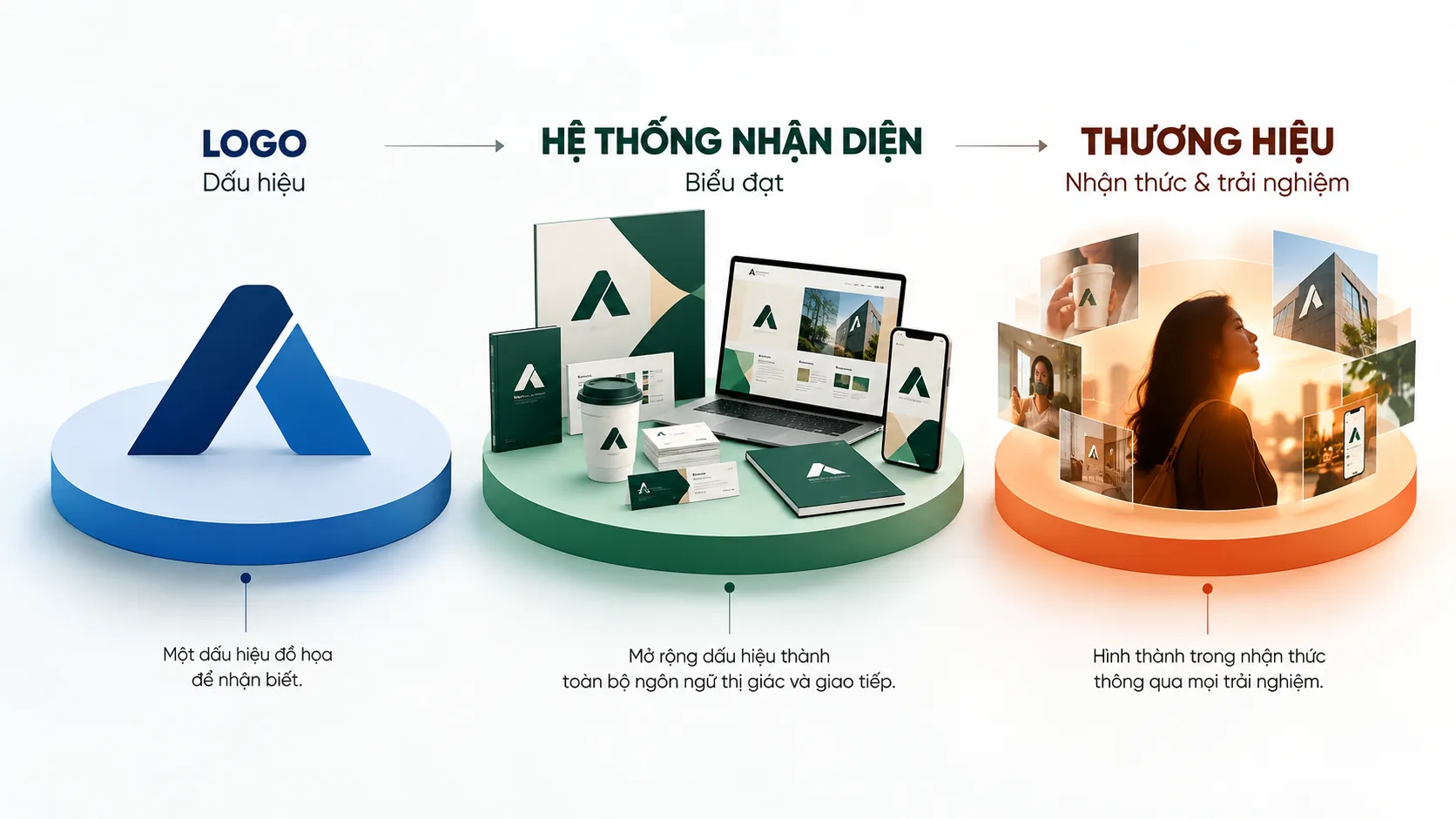
When talking about a brand, businesses tend to start with what can be seen: the logo, colors, packaging, website, tagline or identity set.
These are important components, but they sit on the expression side of the brand.
Before them must come a more strategic question: What does the business want to mean to the market?
At FreshBrand, when we look at a brand ecosystem, the starting point should not be the visual surface but Purpose and Strategy: the purpose and strategy that shape the value an organization chooses to offer the market.
This matters especially for businesses with a long history or facing a need to expand.
A premium brand does not simply sell a high-priced product. The value customers perceive may lie in quality, reliability, experience, convenience or the meaning the product stands for.
A packaging business does not have to sell only a box, a can or a container either. At the level of value, it may be taking part in the problems of preservation, safety, transport, user experience and customers’ peace of mind.
When the shift is made from “the products we have” to “the value we create,” a business begins to see possibilities that the current product range cannot show.
FRAMEWORK
From product to value platform
A brand platform can be seen through three layers of questions:
- Product: What are we selling? This is the most tangible layer and the easiest to change.
- Value: What do customers actually receive from that product or service? This is the layer that determines business meaning.
- Purpose: Why does the business exist to create that value? This is the layer that gives the brand a longer-term direction.
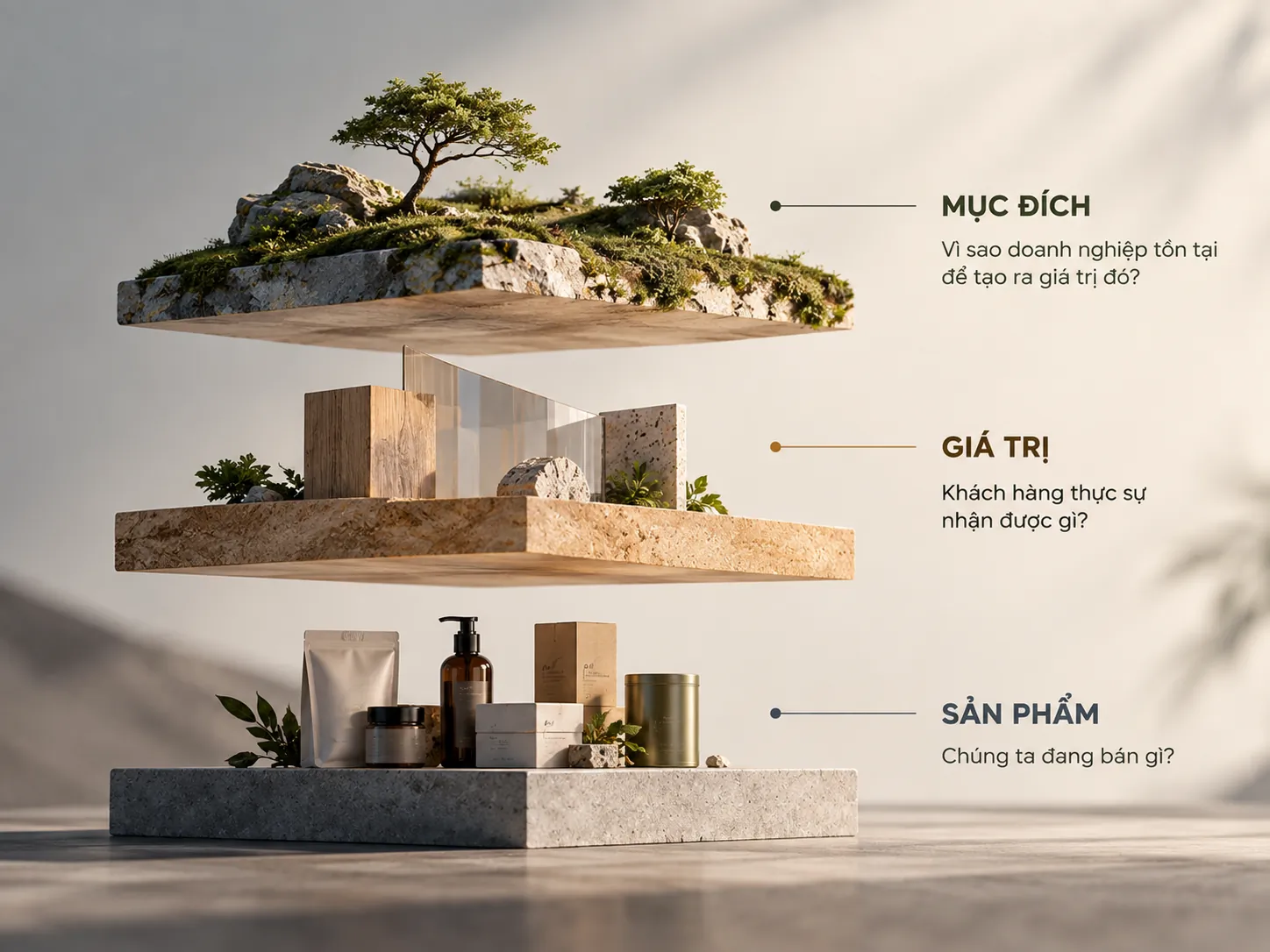
A brand platform with staying power does not deny the product. It places the product in a wider frame of reference, so that each new generation of products can still serve the same core value.
A value proposition means something only when it becomes experience
There is a significant gap between what a brand says it delivers and what customers actually experience.
A business can claim dedication, quality, safety, convenience or innovation. But if customers do not feel those things as they research, buy, use and deal with the business, the value proposition remains on paper.
This is why the Value Proposition should be viewed together with the Customer Experience.
If a brand promises convenience but the buying process is complicated, the promise is weakened.
If a brand talks about reliability but product information is inconsistent across touchpoints, the perception of reliability suffers too.
If a brand wants to be seen as professional but every document, website, pack and conversation presents it differently, customers have to piece the fragments together themselves to understand who the brand is.
In other words, value is not created by a positioning statement alone. Value is confirmed through experience.
COMMON MISTAKE
“Having a beautiful logo and a professional identity set means the brand is built.”
Why it is not enough
Logos and identity help a brand be recognized and expressed consistently, but they do not create a value proposition, a good product or a good experience on their own. If the strategic foundation is unclear, a design can be beautiful yet directionless; if the experience is inconsistent, even a good identity struggles to hold a clear perception in the customer’s mind.
Designing a brand means designing the whole path of expression
The logo is usually the first visual touchpoint customers recognize. But it is only one component of a wider system.
A brand can appear on business cards, company profiles, websites, social media, packaging, signage, spaces, sales materials, uniforms and countless other touchpoints.
If each touchpoint presents the brand in its own way, the brand becomes fragmented.
By contrast, a good identity system lets customers recognize the same brand in different contexts without every application having to look identical.
This is where consistency must be told apart from uniformity.
Consistency does not mean placing the logo everywhere at the same size and in the same layout. It means the different elements follow one shared logic: the use of color, typography, imagery, layout, white space, symbols and visual language all help reinforce the same perception.
FIELD NOTE
In practice, the problem is usually not that a business “lacks a logo.” It is that the logo is used in too many ways, there are too many versions of documents, too many ways of presenting, and too few principles to decide which fits each context.
A brand identity system is not a collection of items
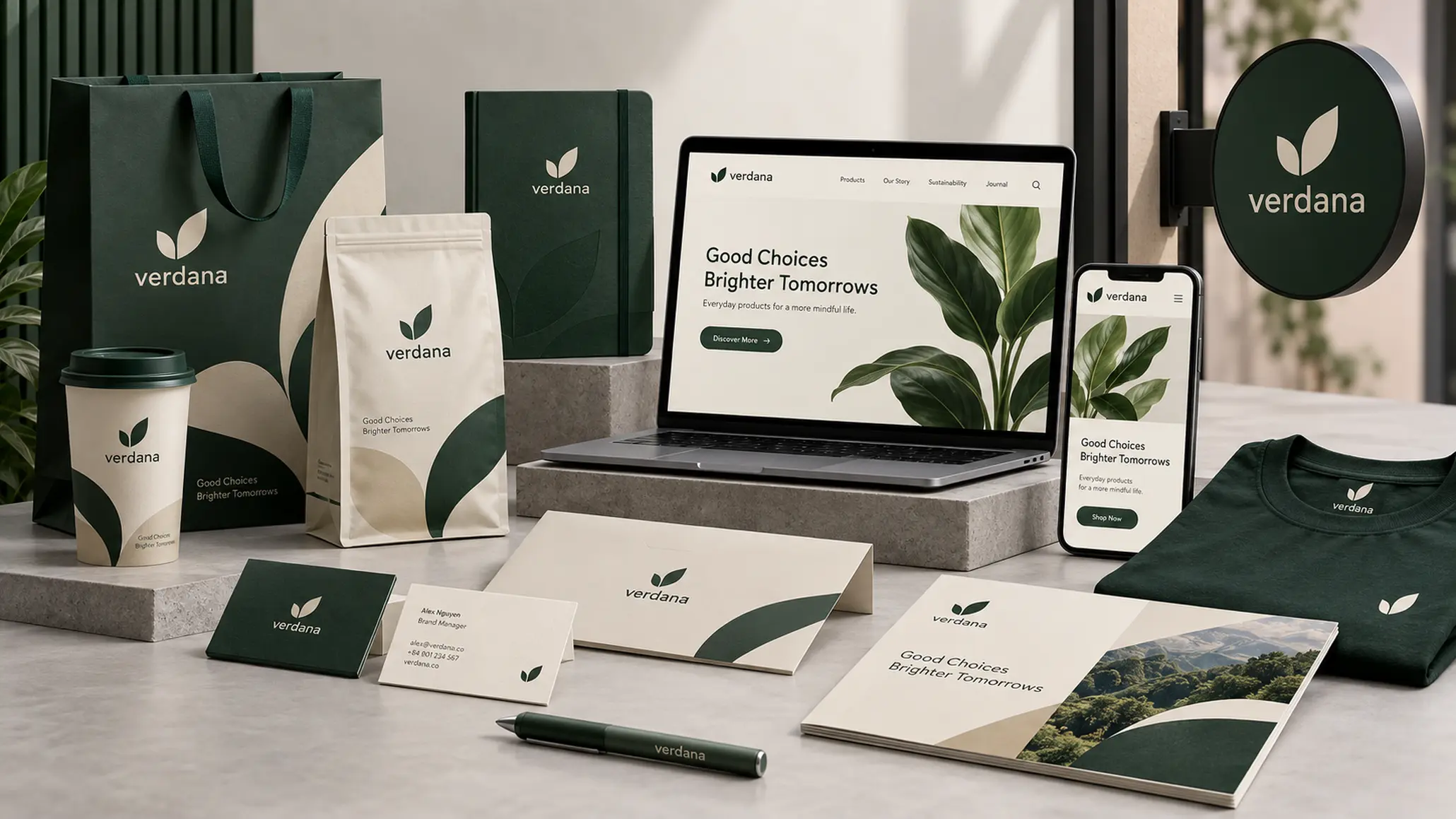
One common misconception is to treat the Visual Identity System as a list of items to be designed.
Business cards, envelopes, catalogues, banners, website, packaging, signage… once these are finished, a business has an identity set.
This approach leans toward producing assets rather than building a system.
What an identity system really has to answer is this: when the brand appears in a new situation that was never designed for, does the person using it know how to decide?
A good system does not merely supply ready-made templates. It supplies principles for creating new applications that still keep the identity.
The main layers of an identity system
Core elements
It includes the brand name, logo, logomark, logotype, tagline, color palette and typography system.
This is the layer that forms the basic signals of recognition.
Office identity
Business cards, staff ID cards, envelopes, letterheads, document folders, invoices, email signatures and uniforms.
This is the layer that turns brand identity into tools for everyday operations.
Marketing and communication
Company profiles, brochures, catalogues, banners, posters and advertising materials.
Here, the identity system must help the brand be both recognizable and effective at organizing information.
Digital identity
Website, landing pages, avatars, social media covers, content templates and an app icon if there is one.
The digital environment makes different demands on size, legibility, speed of reception and the flexibility of the system.
Environmental and product identity
Packaging, labels, signage, backdrops, store or office spaces.
These are touchpoints where the identity has to interact with materials, space and the real behavior of users.
LESS EFFECTIVE
- Treating the logo as the center and designing each item separately.
- Focusing on making each application look “good.”
- Relying on template files instead of principles.
- Controlling only the items that have been designed.
STRONGER
- Treat identity as a system of expression.
- Put function and context of use before form.
- Build principles that can extend to new applications.
- Keep the brand consistent across all touchpoints.
Functionalism: when every visual element needs a reason to exist
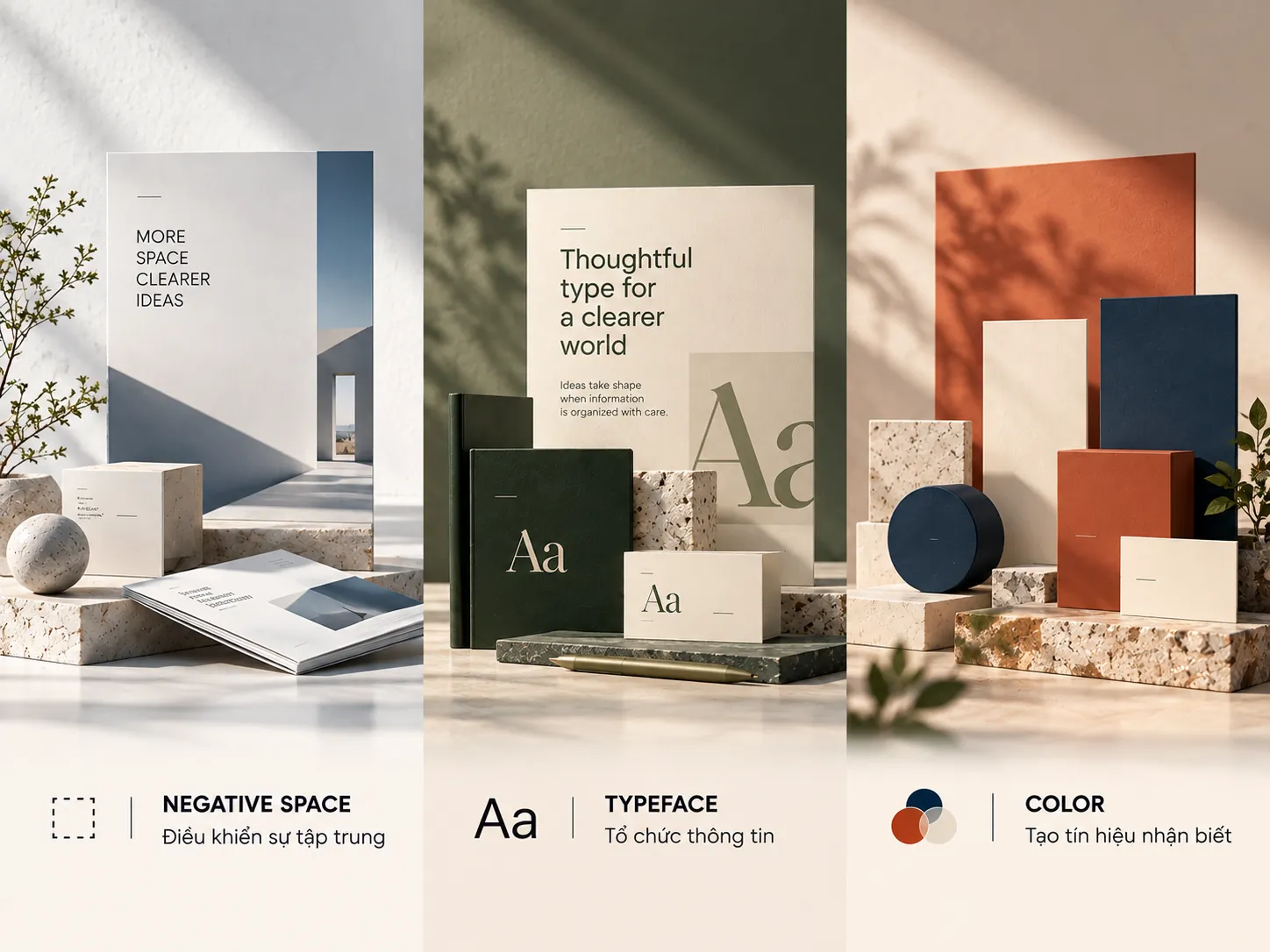
An effective identity system does not need many elements. It needs the right elements.
This is the spirit of Functionalism in design: every visual decision must serve a specific function rather than exist merely as decoration.
This can start with details that seem very small.
White space is not an area left empty
Negative space creates visual distance between components, gives information a hierarchy and lets the eye focus on what matters.
A brand that wants to convey clarity may need a layout system with enough breathing room. A brand that wants to show directness may need a different way of organizing information.
White space is therefore not simply “the part left unused.” It is a tool for directing attention.
Typography is more than choosing a nice font
A typeface has to work under real conditions: small sizes on screen, large headlines, long text, sales materials or signage.
A good typography system must create information hierarchy, keep text readable and contribute to a visual tone of voice.
A font should therefore not be chosen just because it “looks nice.”
Color is not only for decoration
Color helps create signals of recognition and sets the brand apart from other choices in the market.
More importantly, a color system needs an application logic: where the primary color is used, what function the secondary colors serve, in what proportions, and what happens when the brand appears on a light background, a dark one or in a digital environment.
WHAT WE LOOK FOR
When evaluating an identity system, what matters is not only whether a single design looks good. It is how the whole system performs:
- Could someone who did not take part in the design process apply the principles correctly?
- Does the system work across different touchpoints?
- When the business extends its products or channels, can the identity extend without losing its character?
A brand platform is the launch pad for expansion
When the brand platform is clear enough, a business does not have to stay limited forever by the product that first made it successful.
Apple is an example often mentioned in this context: from a personal computer platform, the brand expanded into many layers of products and services in a technology ecosystem.
Amazon also shows how a business can grow beyond its original image of e-commerce by building cloud computing capability through AWS.
Zappos shows a different approach: a shoe business can become a vehicle for building a service experience and a culture of customer care that the company puts at the center of its direction.
The point is not to copy how these brands expanded.
More important is to recognize one principle: the room to expand grows wider when a business defines itself by the value it creates rather than only by its current product range.
EXAMPLE
Go back to the example of the packaging business.
If a business defines itself as “We are a tin can manufacturer,” every change in materials can become a direct threat to the definition of the brand.
But if the business sees its role at the level of value, “We help products be protected, preserved and delivered safely to consumers,” the strategic question changes.
The business can begin to look at new capabilities, technologies or solutions that keep that promise. The product may change, but the brand’s reason for existing stays continuous.
This does not mean a brand platform must never change. On the contrary, a good platform has to be stable enough to give direction and flexible enough to adapt.
Longevity does not come from keeping everything unchanged
There is a paradox in building a brand for the long term: to keep its identity, a business does not have to keep every expression of itself unchanged.
Markets change. Technology changes. Product ranges change. Customer behavior changes. New touchpoints keep appearing.
If a brand relies only on fixed expressions, it risks becoming rigid.
But if a brand changes everything without a shared foundation, it becomes inconsistent.
The problem therefore lies in deciding what must be protected and what can change.
Core values need continuity.
The experience needs to reflect that value.
The identity system should help express value consistently.
The specific applications can then be adjusted to the product, the market and the context.
CHECKLIST
The questions to ask:
- If the business’s flagship product changes, what reason do customers still have to choose the brand?
- Is the current value proposition reflected consistently in the customer experience, or does it live only in strategy documents?
- Can the identity system extend to new products, channels and touchpoints while keeping its character?
- Does each visual element serve a specific function, or does it exist only for aesthetic reasons?
- Is the business managing a brand as a system, or merely managing a collection of design assets?
A brand platform needs to be built from the inside out
A brand with long-term vitality does not start with the question “What should the logo look like?”
It begins with the question: “What does the business want to mean to customers and the market?”
Only then can the value proposition be defined.
From the value proposition, the experience can then be designed.
Experience, in turn, determines how the brand needs to appear.
And from there, a new identity system becomes a real tool for turning strategy into signals that can be seen, used and remembered.
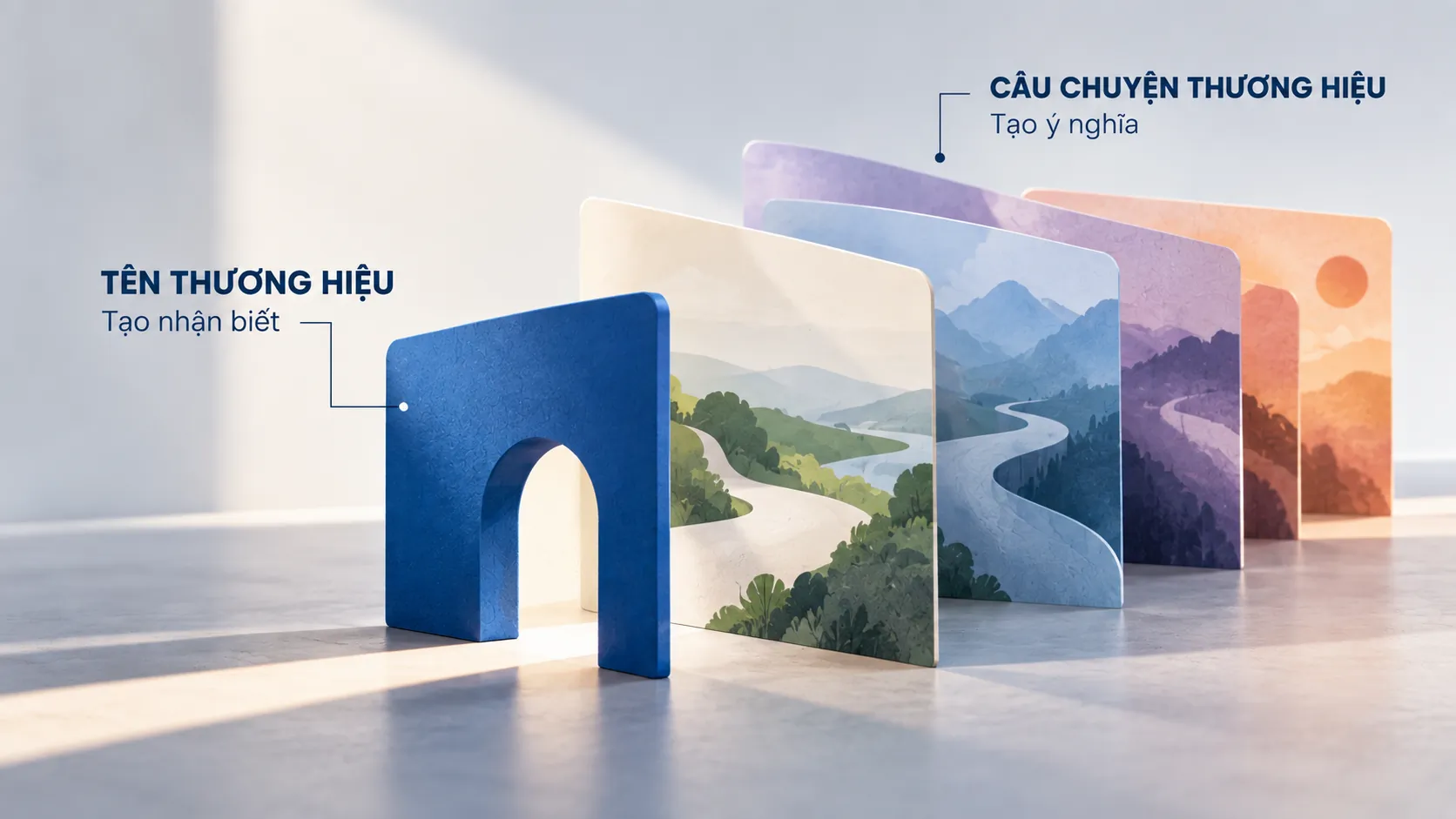
This is why the logo matters but cannot stand for the whole brand. The logo is an anchor point. The identity system is the mechanism of expression. Experience is where the promise is tested. And the brand platform is the layer that connects all of this to business strategy.
When a business protects only its product, it can be limited by the life cycle of that product.
When a business builds a sufficiently clear value platform, it has more grounds to adapt, expand and redefine how it creates value in the future.
FRESHBRAND
Is the business’s brand being built around its current product, or around the value the business wants to keep creating in the future?
If this question has no clear answer yet, it may be time to look again at the brand platform before expanding the identity system further. FreshBrand can work alongside you on brand strategy, connecting value, experience and the system of expression so that the brand platform operates consistently across many touchpoints.