
Understanding your brand: the foundation before building an identity
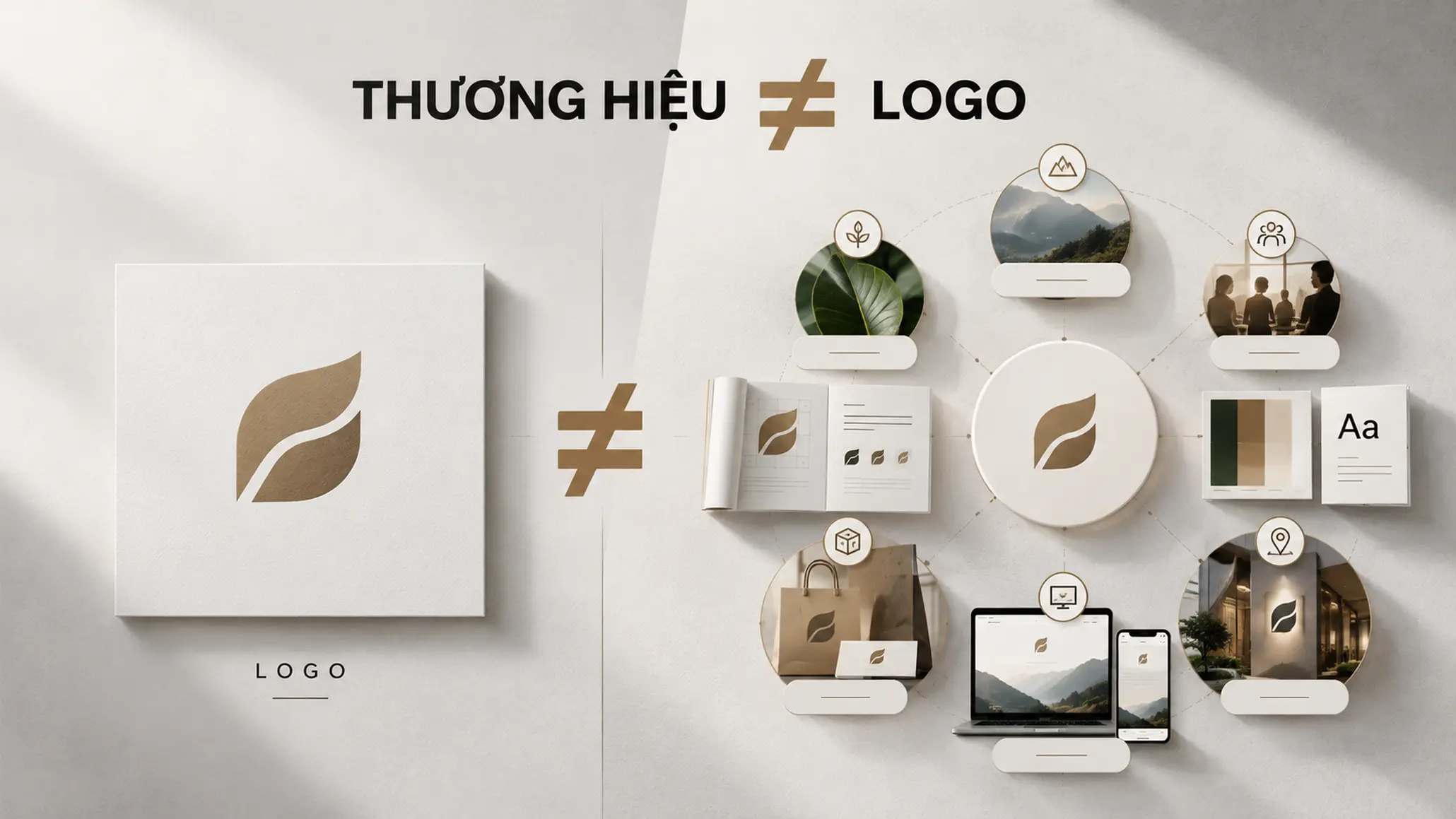
A business can have a beautiful logo, a consistent identity and plenty of brand documents and still not truly understand its own brand. The problem is that a brand is made not only of what the business designs, but also of how it defines who it is, whom it serves, how it wants customers to see it and how it communicates that. So before talking about logo design or identity guidelines, you need to start by understanding the brand.
KEY TAKEAWAY
A brand is not a designed image; it is a system of meaning that the business defines, expresses and reinforces consistently across many points of contact with customers.
A brand is not just a name and a logo design
When starting to build a brand, a business tends to focus on what can be seen right away: the name, logo, colors, typefaces, packaging, website or communication materials.
These are important components, but they belong to how the brand is expressed, not to the whole nature of the brand.
A logo can help customers recognize a business. A color can contribute to recognizability. A typographic system can make documents consistent. But none of these, on its own, can fully answer the more fundamental questions:
- What does the business want to stand for?
- What value do customers need to receive?
- Which attributes does the brand want to be recognized for?
- Why should customers trust the brand?
- What personality does the brand need to show?
- Which direction does the business want the brand to grow in?
These questions belong to the strategic and perceptual side of the brand. Until they have clear enough answers, design easily becomes a search for a form rather than the translation of a brand direction into an identity language.
A good identity has to start from a brand with a clear direction
The logo, colors, typefaces and other identity components should be seen as the means of expressing a brand. If the business has not clearly defined what it wants to convey, the choice of form is often driven by personal taste, market trends or short-term aesthetic judgments.
Understanding your brand is really understanding the relationship between business and customer
A business usually describes its brand from an internal point of view: who we are, what we provide and what we want to become.
But a brand only really means something when those things are turned into perception on the customer’s side.
Customers do not take in a brand through a strategy document. They meet it through concrete signals: a name, a logo, a message, a website, a package, a conversation or an experience.
Every point of contact contributes to how customers understand the business.
So understanding your brand has to be seen from both directions:
What the business wants to say and how customers are likely to understand it.
The gap between the two sides is one of the key problems brand management has to solve.
For example, a business may see itself as a friendly, trustworthy brand. But if its language, imagery and experience are too distant or inconsistent, customers may not form that same perception.
This shows that a brand does not live only in the business’s intentions. It has to be translated into expressions that customers can recognize and remember.
Six elements that bring the brand into focus
 alt=”Six-element framework made up of insight, reason to believe, attributes, values, personality and vision.” class=”wp-image-35614″ />
From the foundation of the source article, understanding your brand can be organized around six groups of elements:
- Brand insight: What about the customer and the market context needs to be understood for the brand to communicate meaningfully?
- Reason to believe: What gives customers grounds to trust what the brand claims?
- Brand attributes: Which characteristics does the business want customers to associate with the brand when they hear its name?
- Brand values: Which values does the brand hold dear and stand for?
- Brand personality: If the brand were expressed as a consistent character, how would it communicate?
- Brand vision: Which position and future is the brand moving toward?
The point is not to draw up a list of six elements and let them sit apart. The value of the system lies in the relationships among the elements.
Insight helps the business understand its customers. The reason to believe lays the ground for trust. Attributes and values define what the brand wants to be known for. Personality shapes how the brand communicates. Vision gives direction to long-term decisions.
When these elements point to one central idea, the business has a better basis for managing the brand consistently.
From “what the brand wants to say” to “what customers actually receive”
 alt=”Diagram showing the relationship between the business, brand touchpoints and customer perception.” class=”wp-image-35613″ />
One of the hardest problems in brand management is the gap between intention and perception.
A business can control most of what it puts into the market: design, message, content, imagery and the way it communicates. But it cannot fully control how customers interpret those signals.
This makes understanding customers an inseparable part of brand management.
If the brand is seen only from the inside, a business can easily build an image that reflects itself but does not necessarily connect with customers.
Conversely, if a brand only chases what customers like at the moment, it can lose its own character and direction.
The task, then, is not to choose between the business and the customer, but to find the point where these meet:
What the business wants to become → what customers need → what basis the brand has to be trusted → how all of it is expressed.
FIELD NOTE
A common sign of a brand that is not fully understood is that each department in the business describes it differently. Marketing talks about values, design talks about imagery, sales talks about products and leadership talks about direction. When these accounts do not meet on a shared foundation, the external communication system easily becomes fragmented.
Brand management is managing the consistency of many points of contact
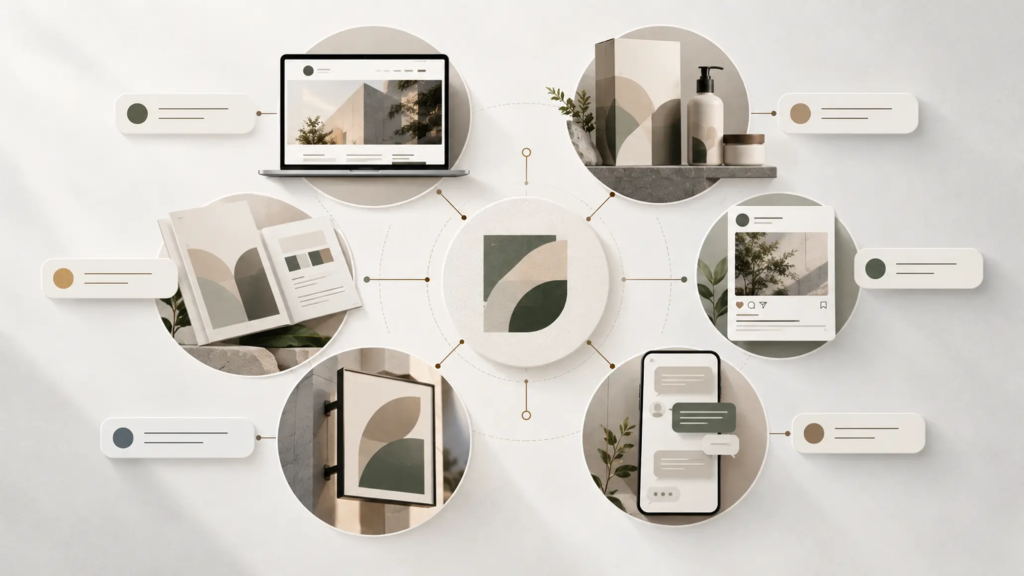 alt=”Touchpoint system of website, packaging, documents and content all expressing one brand.” class=”wp-image-35615″ />
If a brand appears only in its logo, a business can manage it with a set of design guidelines.
But in practice, a brand appears in many more places than that.
It shows up in how a business writes a headline, answers a customer, presents a document, designs a website, uses imagery, chooses colors or organizes its visual touchpoints.
That makes brand management a problem of the communication system.
The goal is not to make everything identical. A social media post does not need to look like a sales document, and a website does not need to match the packaging exactly.
What matters most is that customers can recognize one unified brand behind different forms.
LESS EFFECTIVE
- Treating brand identity as a collection of design templates.
- Judging a brand mainly by how attractive or modern its imagery is.
- Letting each channel build its own way of communicating.
- Changing the imagery often without changing or clarifying the brand foundation.
STRONGER
- Treat the identity as a system that expresses a brand direction.
- Evaluate a design on whether it conveys the right meaning and supports recognition.
- Build shared principles so touchpoints can differ yet stay consistent.
- Change the expression only when there is a strategic reason or a clear brand need.
Why can a beautiful logo still be an ineffective one?
A logo design may be highly rated visually and still not solve the brand problem.
More important than the question “Is the logo beautiful?” is this:
How is the logo helping the brand be recognized and remembered?
If the business has not clearly defined the attributes, values and personality it wants to convey, the designer has little basis for choosing a suitable form.
The design process then easily turns into an argument over taste:
“This logo is nicer.”
“That logo looks more modern.”
“This color feels more upscale.”
“This typeface is easier on the eye.”
Comments like these can be useful to a point, but they are not enough to base a brand decision on.
A good design decision needs to be set against a larger question: does this form help the brand convey what it needs to convey?
COMMON MISTAKE
“The brand isn’t strong because the logo isn’t good-looking enough.”
Why that is not enough
Why that is not enough
A logo is one component of an identity system, not the whole brand. If the problem lies in positioning, message, personality, values or inconsistency between touchpoints, changing the logo alone may not address the real cause.
Brand personality helps a business communicate more consistently
The concept of “brand personality” matters especially because it helps a business answer the question: how will the brand speak and behave?
Two businesses can offer similar products yet create very different impressions because of how they communicate.
One brand may choose a friendly way of speaking. Another may keep a professional, direct tone. The difference lies not only in the words; it can also show in imagery, color, typeface and the whole way the brand appears.
Brand personality, then, should not be understood simply as picking a few adjectives to describe the business.
It has to become a principle that helps answer specific decisions:
- What tone of voice does the brand use with customers?
- What should the imagery express?
- What suits the brand and what does not?
- When there are several design options, which one fits the defined personality better?
WHAT WE LOOK FOR
In brand work, one of the things to look at before judging a design is which idea it is expressing and whether that idea relates to the brand direction.
- Check whether the form serves a clear meaning or only creates visual impact.
- Check whether touchpoints all point toward one brand personality.
- Check whether the system has enough principles to be used consistently in practice.
Brand vision keeps today’s decisions from being limited by the present
A brand needs to suit the business not only today. It also needs to support the direction of future growth.
This is why brand vision needs to be considered together with the other elements.
If a business is growing but its brand system has been built around very short-term characteristics, the brand can quickly become too narrow.
By contrast, a sufficiently clear direction can help a business make more consistent decisions as products, services, channels or scale change.
Vision, then, is not a slogan to put in a brand document. It has value when it becomes a criterion that helps the business weigh brand decisions over the long term.
Understand the brand first, design second
When the whole issue is placed in one system, the logical order should not start with the question:
“How should we design the logo?”
Instead, start with:
“How does the brand need to be understood, by whom and for what?”
Only then comes the question of how to express it.
PROCESS
 alt=”Four-step process from understanding the brand to defining, expressing and managing it.” class=”wp-image-35616″ />
- Stage 1 — Understand: Clarify the customers, insight, values, attributes, reason to believe, personality and vision of the brand.
- Stage 2 — Define: Connect the elements into a focused brand direction that can serve as a basis for decisions.
- Stage 3 — Express: Translate that direction into a name, logo, identity system, language and suitable forms of communication.
- Stage 4 — Manage: Make sure touchpoints continue to express the brand according to the principles that have been defined.
This approach puts design in its proper place: design is the means of expressing brand strategy, not the only starting point of strategy.
FreshBrand and the problem of brand management
In the source content, FreshBrand is presented with a scope wider than standalone logo design, including brand renewal, brand development, identity design, naming, brand guidelines and brand-building strategy.
This fits the view of a brand as a system.
When a business changes its identity without looking at what lies behind it, the visual change may only address the surface. By contrast, when a business starts by understanding its brand, the identity can become a tool for making that direction easier to recognize in practice.
FreshBrand also advises on logo design, brand identity system guidelines and the digital brand. These activities need to be placed within one logic: define the brand first, then organize how it is expressed and managed.
When does a business need to revisit how well it understands its brand?
Changing a logo does not mean a business has to rebuild its entire brand. But certain signs can show that the brand foundation needs another look.
CHECKLIST
Questions to ask:
- Do leaders and different departments in the business describe the brand in the same direction?
- Are current customers receiving the message the business wants to convey?
- Has the business clearly defined the attributes it wants to be known for?
- Is there a clear reason for customers to believe what the brand claims?
- Is the brand personality expressed consistently in speech, writing and graphics?
- Does the current identity system really support the brand direction, or is it just maintaining an old image?
- When a new design decision has to be made, does the business have clear principles to choose by, or does it mostly rely on personal feeling?
Understanding your brand is the condition for a meaningful identity
A strong brand is not built simply by making its imagery more attractive. The greater value lies in creating a system in which strategy, personality, message and identity all point to one clear understanding.
The logo still matters. The identity still matters. But they work better once the business understands what it wants to represent and what customers need to receive from the brand.
So the question before design should not be only “How do we make the logo?” but “How does the brand need to be understood?”
FRESHBRAND
If your business is preparing to build or refresh its identity, start by checking the brand foundation before deciding on the design.
FreshBrand offers brand development, brand renewal, naming, identity design, brand guidelines and brand-building strategy.