
7 essential pages that help a business website retain customers and drive conversion
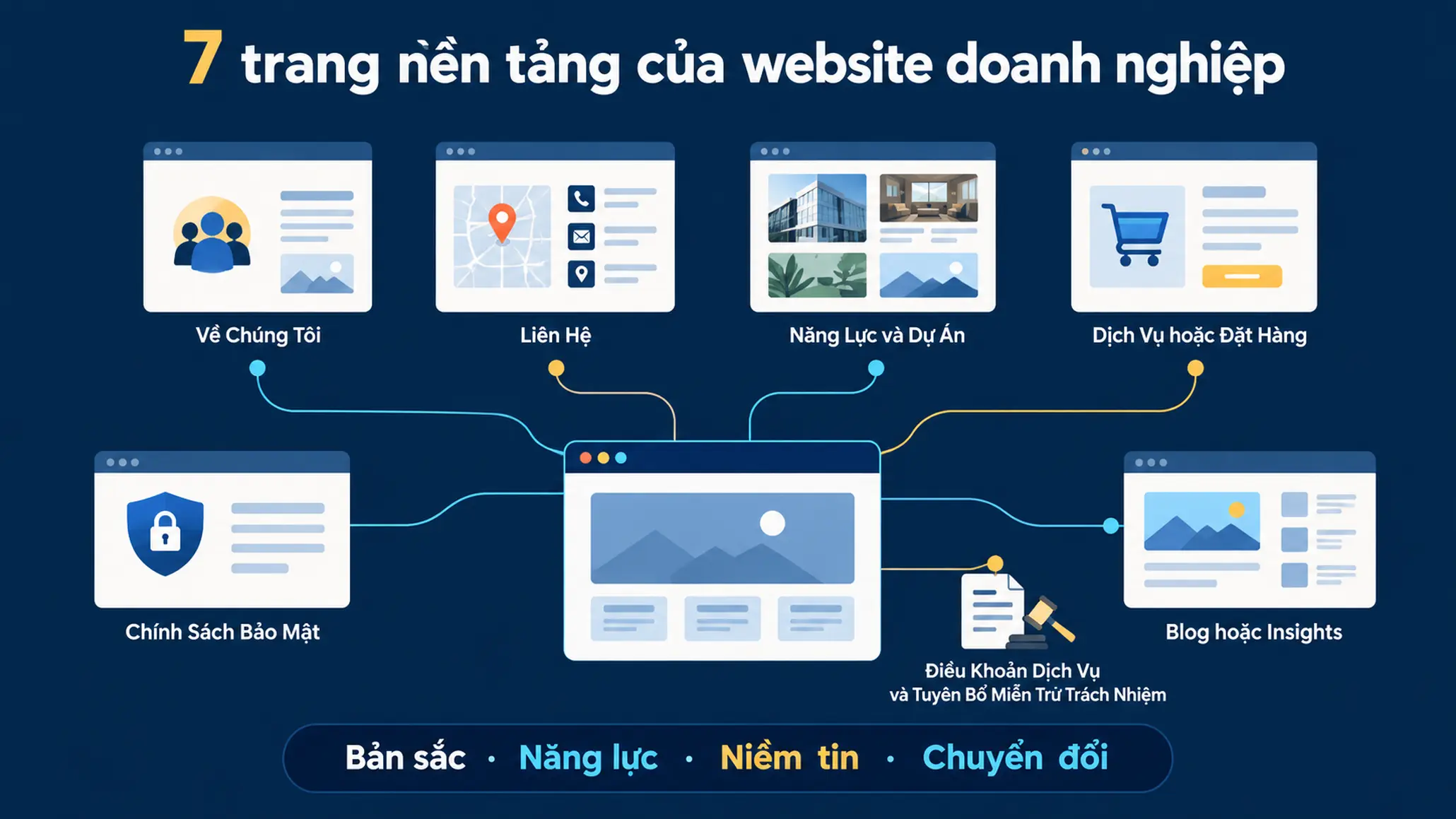
A business website can be carefully designed and still fail to persuade customers if it lacks necessary information or makes the next step hard to find. When evaluating a website, what matters is not only how it looks but how the business presents its capabilities, answers concerns, builds trust and guides customers toward a decision. The seven essential pages below help a business organize those touchpoints into one consistent experience.
KEY TAKEAWAY
An effective website needs to help customers understand who the business is, what problems it can solve, why it can be trusted and how to take the next step.
1. The About Us page: explain the business’s identity and capabilities
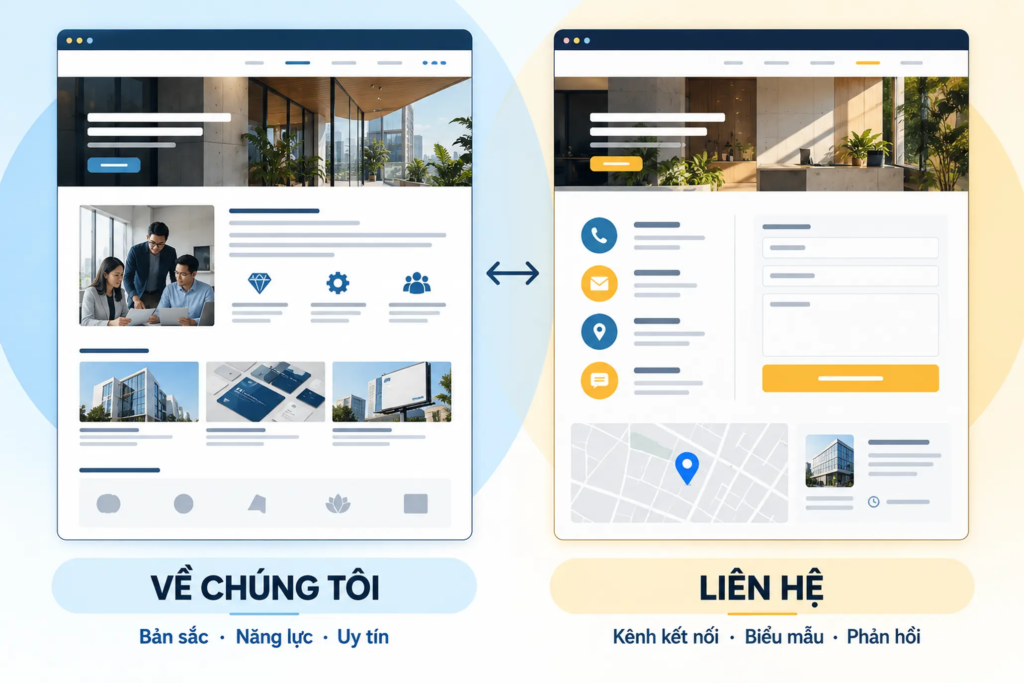
The About Us page is usually where customers go when they want to understand the business behind a product or service. Yet many websites still devote most of this content to the founding history, development milestones and generic claims about quality.
For B2B customers, this information matters only when it helps them judge how well the provider fits their needs. The About Us page needs to answer what the business is pursuing, what principles it operates on and what capabilities it has to deliver on its commitments to customers.
PRINCIPLE 01
Tell the business’s story from the customer’s point of view
A useful About Us page connects the business’s story to the reasons customers can trust and choose it.
The content should clarify three groups of information:
- Direction and vision: What value does the business want to create in its field?
- Capabilities and working method: How does the business approach problems, organize resources and carry out the work?
- Verifiable evidence: What information can help customers verify credibility, such as a company profile, verified awards, press coverage or officially announced strategic partners?
Not every business needs to present all of the above content in equal depth. How information is organized should depend on the industry, the target customers and the questions that must be answered before a customer makes a decision.
2. The Contact page: make it easy for customers to start a conversation
The Contact page is the point of transition between gathering information and taking real action. If users are interested in a service but do not know how to get in touch, have to fill in a form that is too long or receive no clear guidance, the business may miss a commercial opportunity.
FRAMEWORK
Three elements of a convenient Contact page
- Clear information Show the office address, phone number, email and the official contact channels currently in use.
- The right form Ask only for the information truly needed to receive and process the initial request.
- A smooth experience Make sure input fields, the submit button and response messages work well on both computers and mobile devices.
The contact form also needs to suit the type of business. A business offering in-depth consulting may need preliminary information about the project, while a retail website usually needs to prioritize actions that support buying.
The goal is not to collect as much data as possible, but to help customers provide exactly the information needed with the least friction.
3. The Capabilities and Projects page: turn introductions into evidence
Business customers usually need more than a list of services before choosing a partner. They want to know how the provider has approached similar problems, on what basis the solution was built and how the results relate to their current needs.
The Capabilities and Projects page lets a business answer those questions. However, a collection of attractive images or a list of client names is not enough to explain the value of the work done.
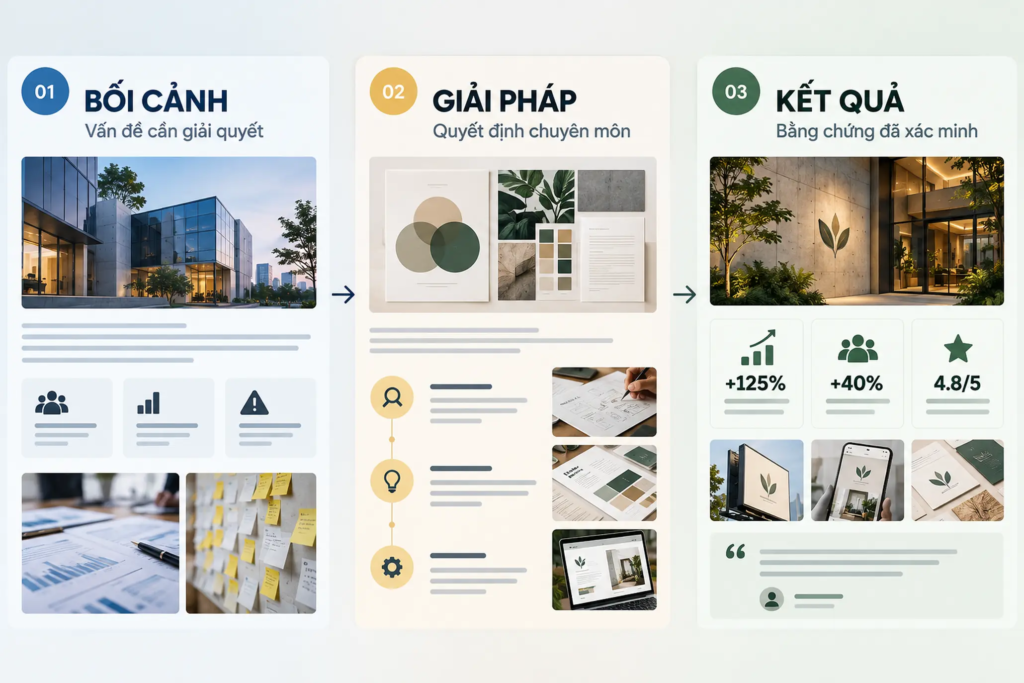
PROCESS
- Context Describe the problem, the goal and the important conditions of the project.
- Solution Present the approach, the key decisions and how the solution meets the customer’s requirements.
- Results State changes or results that can be verified, with figures where reliable data exists.
This structure turns a project page into a case study, helping readers understand not only the final product but also the thinking and problem-solving behind it.
For a brand design project, for instance, a business can lay out the problem to be solved, the strategic direction chosen, how the identity system was implemented and the results that have been recorded. If there is no data yet on business impact, the content should focus on verified outputs rather than inferring financial results.
COMMON MISTAKE
“Showing attractive projects is enough to persuade customers.”
Why that is not enough
Images show the quality of the output but do not always show the ability to solve problems. A valuable project profile needs to explain the link between context, professional decisions and real results. This way of presenting helps customers judge how well the business’s capabilities fit the problem they face.
4. The Services or Order page: guide customers to a decision
The Services page and the Order page serve different purposes, but both need to help users understand their options and take the next step conveniently.
For a B2B service website, customers need to know the scope of work, the problems the service solves, how it is delivered and how to get in touch to learn more. For an e-commerce website, buyers need clear product information, prices, terms of sale and an ordering process.
FRAMEWORK
Organize information in the order of decision-making
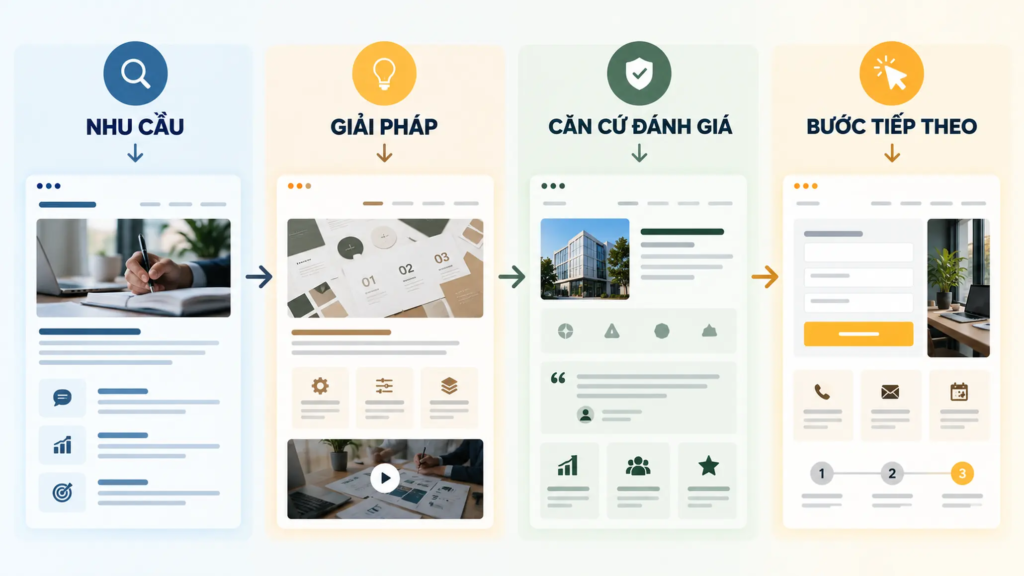
A service page can be organized in the following order:
- Need Identify the problem or goal the service is aimed at.
- Scope of the solution Explain what the business provides and the limits of the service.
- Basis for evaluation Add information about capabilities, process, answers to common concerns or related projects where there is evidence.
- Next step Guide users to book a consultation, submit a request or take another suitable action.
On the Order page, the sequence needs to be adjusted to shopping behavior. Key information such as price, product options, additional costs and terms of sale must be easy to find before users complete an order.
An effective call to action (CTA) does not have to stand out through visual effects. What matters is that the CTA appears at the right moment, states the action clearly and fits the customer’s level of readiness.
5. The Privacy Policy page: explain how the business handles data
When a website has contact forms, newsletter sign-ups, user accounts or purchasing, the business needs to take seriously how it collects and handles personal data.
The Privacy Policy page helps users understand what data is collected, why it is needed, how it is used and what rights they have over their information.
FIELD NOTE
A privacy policy has practical value only when its content accurately reflects how the website operates. If the business uses forms, analytics tools, advertising platforms or third-party services, the policy needs to be reviewed so that it matches the actual handling of data. Posting a generic template without checking that it fits can open a gap between the commitments published and what the business actually does.
A business should build its policy on the processes it actually applies to collect, store, use and protect data, and review the related legal obligations at the same time. This is not only content a website needs to have; it is part of data governance and of building trust.
6. The Terms of Service and Disclaimer page: clarify limits and responsibilities
Terms of service and disclaimers are often seen as secondary pages, but they play an important part in defining the scope of use of the website, the rights and obligations of each party, and the limits that apply to the content or services provided.
Depending on the business model, the content may need to clarify:
- Scope of service and conditions of use.
- Intellectual property and the use of content.
- Terms of sale, payment, returns or service cancellation where relevant.
- Limits of liability that fit actual operations and the law.
- Additional terms that apply to the website’s particular functions.
PRINCIPLE 02
Legal documents must reflect the actual business operations
Terms of service do not automatically protect a business from every dispute. The validity and enforceability of each clause depend on its specific content, how the agreement is formed and the relevant law.
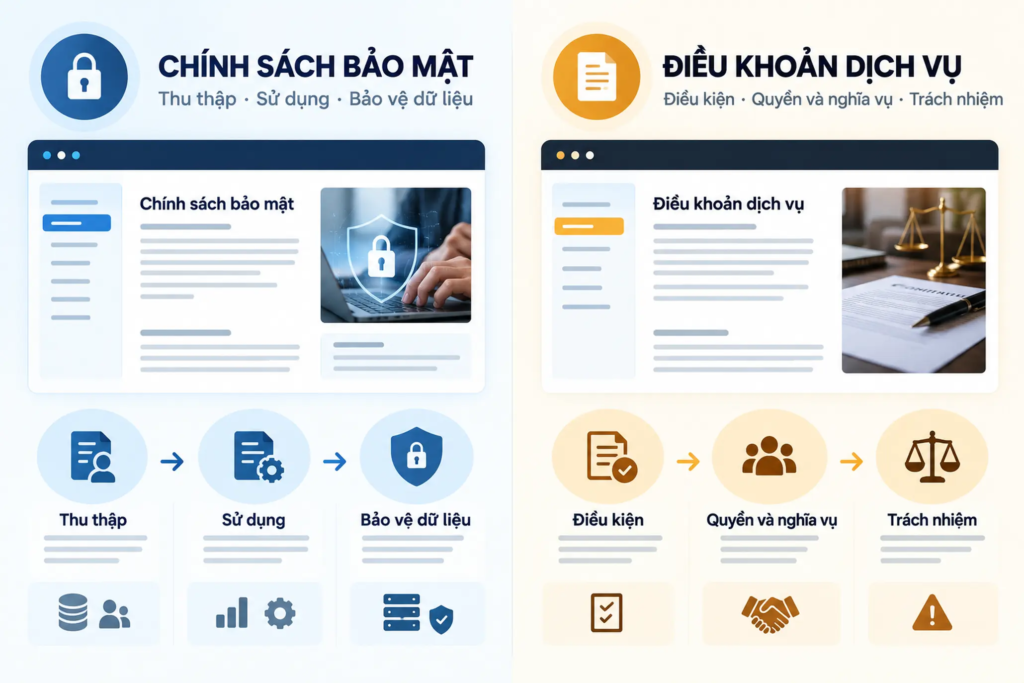
Likewise, having legal pages does not mean a website will automatically be rated higher by search engines. A business should build these pages first of all to make its operations transparent, meet the obligations that apply and help users understand the relevant conditions.
If you have no in-house legal team, you can use a template generator to get an initial structure. The templates still need to be reviewed and adjusted to the business model, the way data is handled and the regulations that apply. A generic template should not be used as is, as a substitute for legal review.
7. The Blog or Insights page: build expertise through content
The Blog or Insights page is where a business shares knowledge, explains industry issues and shows its professional approach. When developed with direction, the content can support customers at many stages: from understanding the problem and comparing options to evaluating a suitable partner.
However, the value of a blog does not lie in the number of articles published. A website with plenty of content that lacks depth, does not meet search needs or has no relation to the business’s capabilities will still struggle to create lasting value.
FRAMEWORK
Three principles for organizing expert content
- Start from customers’ questions Choose issues that genuinely relate to the needs, decisions and obstacles of the target customers.
- Develop content with depth Explain concepts, analyze causes, clarify the options and provide criteria so readers can judge for themselves.
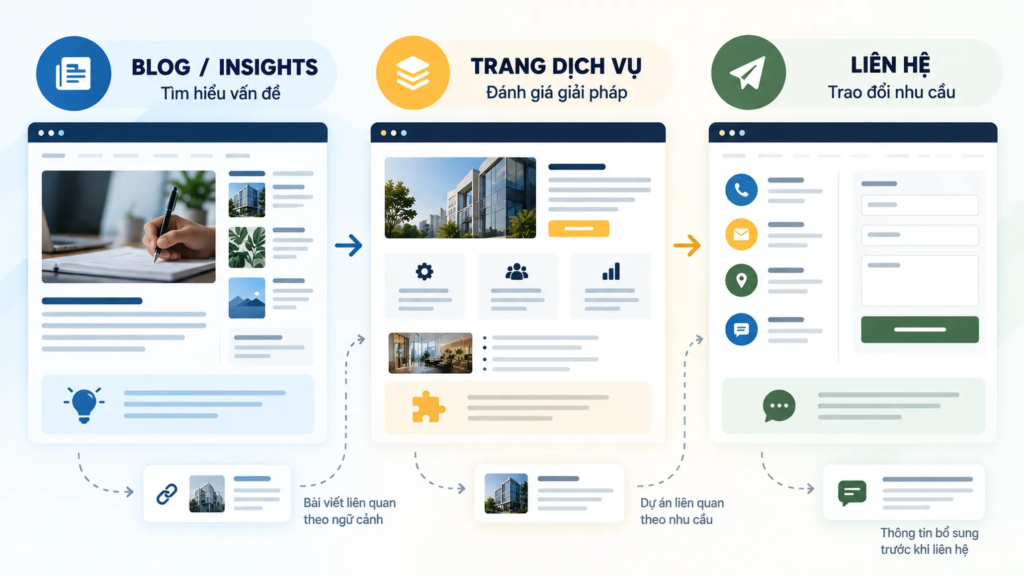
- Organize content into a system Link articles on related topics so readers can easily keep exploring and reach related information.
As for SEO, useful content helps a website better meet users’ search needs. Ranking, however, depends on many other factors, such as relevance to the query, technical quality, site structure and competition in the search results. A business should therefore not treat regular posting as enough to reach a high ranking.
A blog also needs to link to service and project pages in context. When an article explains a problem the business is able to solve, readers should have a suitable path to learn more about the method and scope of the service.
Evaluate the seven pages in relation to the whole customer path
The seven pages above should not be built as separate items just to complete a website checklist. Each page has a different role while supporting the others along the path of research and decision.
LESS EFFECTIVE
- Judge a website mainly by its look and interface effects.
- Write content for each page separately without defining the customer’s questions.
- Place CTAs in many positions without making the next action clear.
- Publish a policy or project profile from a generic template without checking that it fits.
STRONGER
- Evaluate content, usability and consistency of experience together.
- Define each page’s role in answering concerns and supporting decisions.
- Design the paths between pages so users keep moving naturally from page to page.
- Check that the information is accurate, that it can be operated in practice and that it fits actual activities.
CHECKLIST
Before putting a website into operation or carrying out a round of improvements, a business should ask the following questions:
- Does the About Us page help customers clearly understand the business’s identity and capabilities?
- Does the Contact page provide enough information and let users send a request conveniently?
- Does the Capabilities and Projects page explain the problem, the solution and the verified results?
- Does the Services or Order page make the scope of supply and the next step clear?
- Do the legal pages reflect the website’s actual operations and the requirements that apply?
- Does the Blog or Insights page address customers’ real questions?
- Are the pages sensibly linked and do they give a consistent experience on both mobile and desktop?
From website structure to brand effectiveness
The seven essential pages help a business organize its key information, but the number of pages is not the only measure of a good website. What matters is whether each page does its job, whether the content has enough support, and whether the path between pages fits the way customers do their research.
For a business website, interface design needs to go together with content strategy, information structure and business goals. When these are clearly defined, the website can help customers assess capabilities, understand the value on offer and choose their next step without having to search or guess too much.
FRESHBRAND
If your current website does not yet show your capabilities clearly, or does not support the customer’s decision path well, start by reviewing the information structure, the content and the user experience before investing further in the interface. FreshBrand works with businesses on brand direction and on website design tied to business goals.